Why a Hidden Water Leak Can Cost You More Than You Think
A slow drip inside a wall or underground pipe might not seem like an emergency. You can't see it, you can't hear it, and life carries on as normal — until your next Sydney Water bill arrives and the numbers don't add up. Hidden water leaks are one of the most common and costly plumbing problems for homeowners, landlords and property managers across Blacktown and Western Sydney.
The good news is that your water meter is one of the most useful tools you have. With a few simple checks, you can tell whether water is escaping somewhere it shouldn't be — before the damage spreads to your walls, floors or foundations.
This guide walks you through exactly how to do it, in plain language, with no special tools required.
Where to Find Your Water Meter
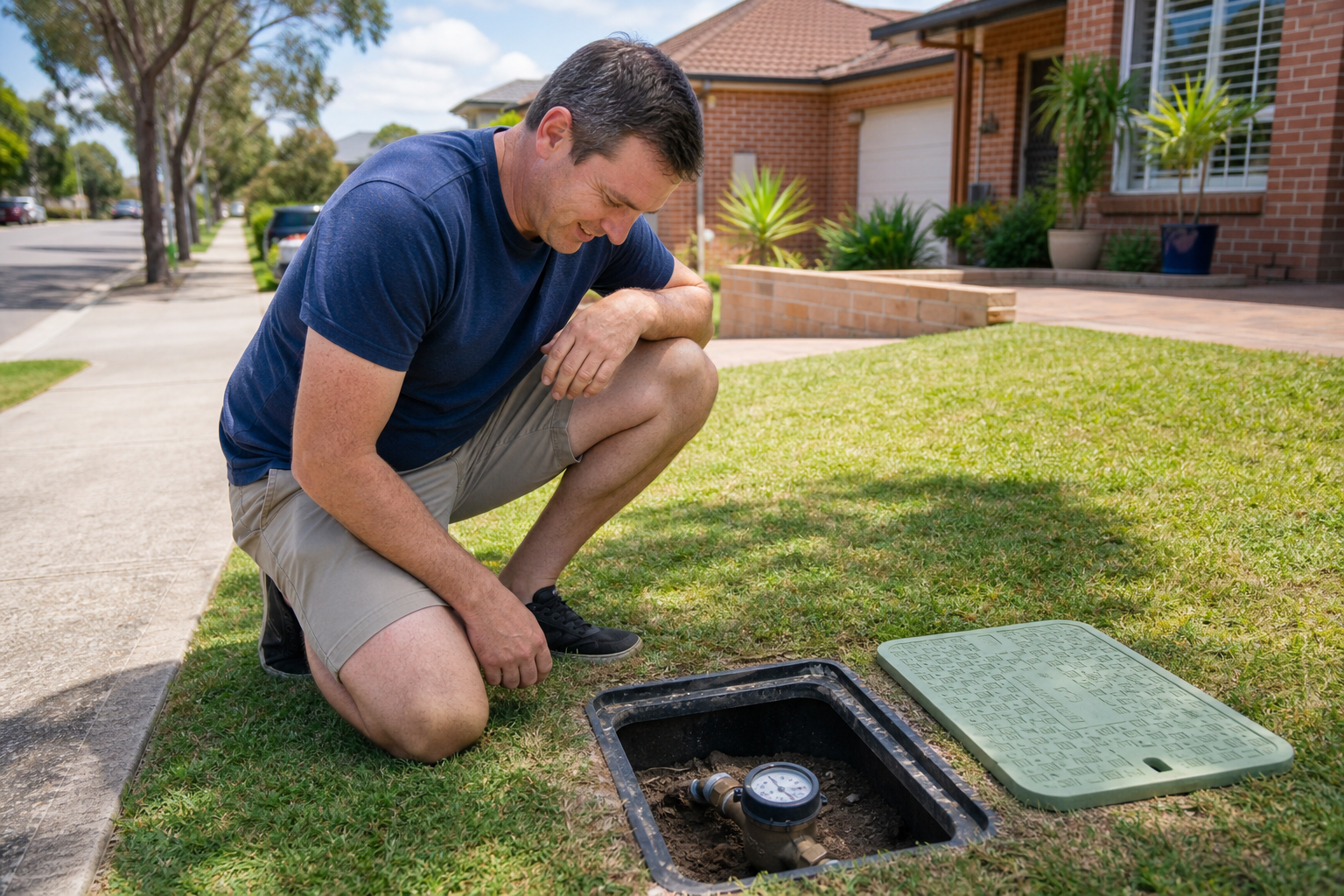
Most residential water meters in New South Wales are located near the front boundary of the property — often in a small concrete or plastic box set into the ground, close to the footpath or driveway. Look for a rectangular lid that says Water Meter or carries a Sydney Water logo.
If you're in a unit or apartment block, your individual meter may be in a shared meter cupboard. Check near the front entrance or ask your strata manager if you're unsure.
How to Read Your Water Meter
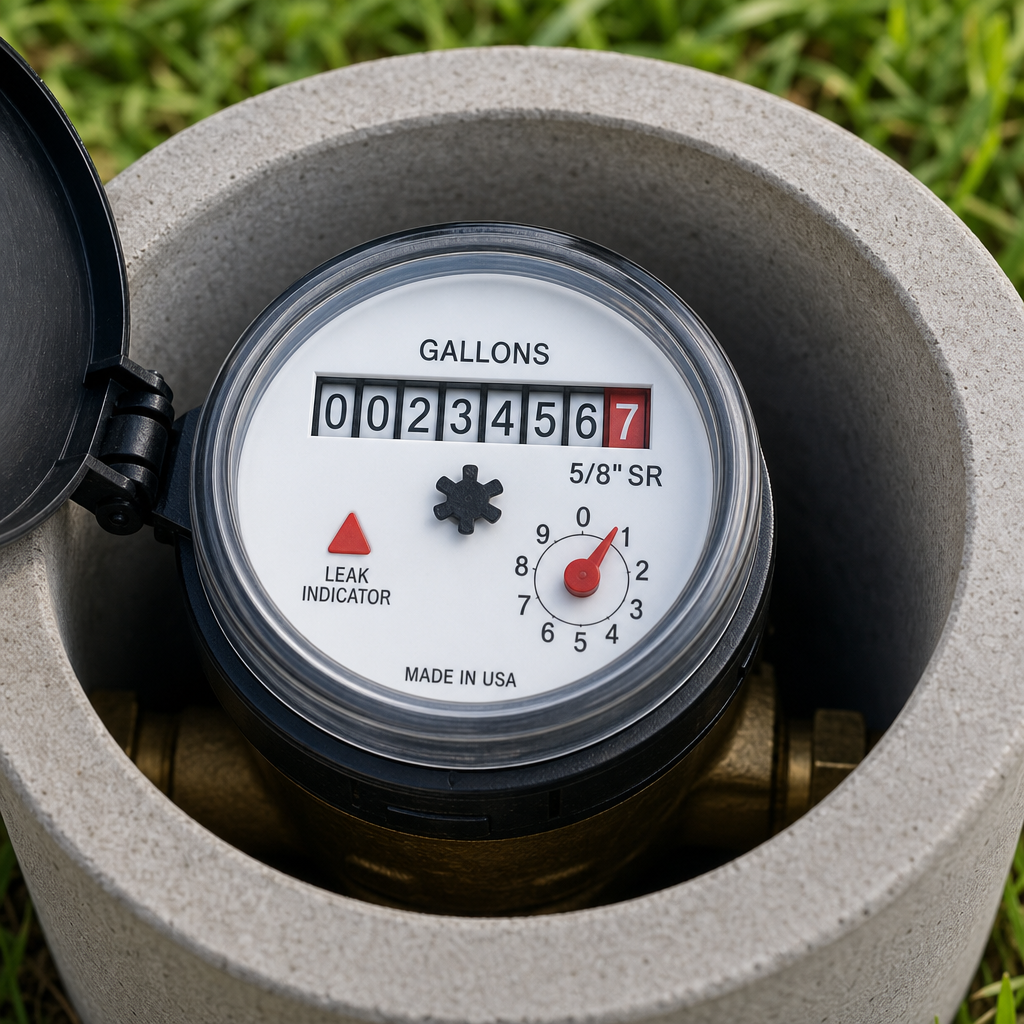
Once you've found the meter, lift the lid carefully and brush away any dirt or debris. You'll see a row of numbers — these measure the total volume of water used in kilolitres (kL). One kilolitre equals 1,000 litres.
Reading the meter is straightforward:
- Write down the full number displayed on the dial, reading left to right.
- Note the date and time.
- Come back after a set period — say 24 hours — and write down the new reading.
- Subtract the first reading from the second to calculate how much water was used.
Most meters also have a small leak indicator — typically a small red or blue triangle, star or dial that sits separately from the main number display. This indicator spins whenever water is moving through the meter, even in tiny amounts.
The Simple Leak Test Anyone Can Do
This test takes about 30 minutes and requires nothing more than a pen and paper.
- Turn off every tap, appliance and irrigation system in and around your home. Make sure no one flushes a toilet or runs a dishwasher during the test.
- Go to the meter and check whether the leak indicator is moving. If it is spinning with everything turned off, water is moving through your pipes — and that strongly suggests a leak somewhere on your property.
- Write down the exact meter reading, including any decimal digits.
- Wait 30 minutes without using any water.
- Return and read the meter again.
If the reading has changed — even slightly — you likely have a hidden leak. The bigger the change, the more significant the leak.
What the Numbers Mean
To give you a rough sense of scale: a continuously running toilet can waste around 200 to 400 litres per day. A small dripping tap might lose 20 litres a day. A burst or cracked underground pipe can waste far more. Over a quarter, these losses add up to real money on your water bill and real damage to your property.
Common Places Hidden Leaks Occur
If your meter test suggests a leak, the next step is narrowing down where it might be. Here are the most common culprits in Western Sydney homes:
- Toilets: A faulty flapper valve or inlet valve can let water trickle silently from the cistern into the bowl around the clock. Add a few drops of food colouring to the cistern and wait 10 minutes without flushing — if colour appears in the bowl, the toilet is leaking.
- Tap washers: A dripping tap is easy to spot, but a tap that leaks internally into the drain may not be visible at all.
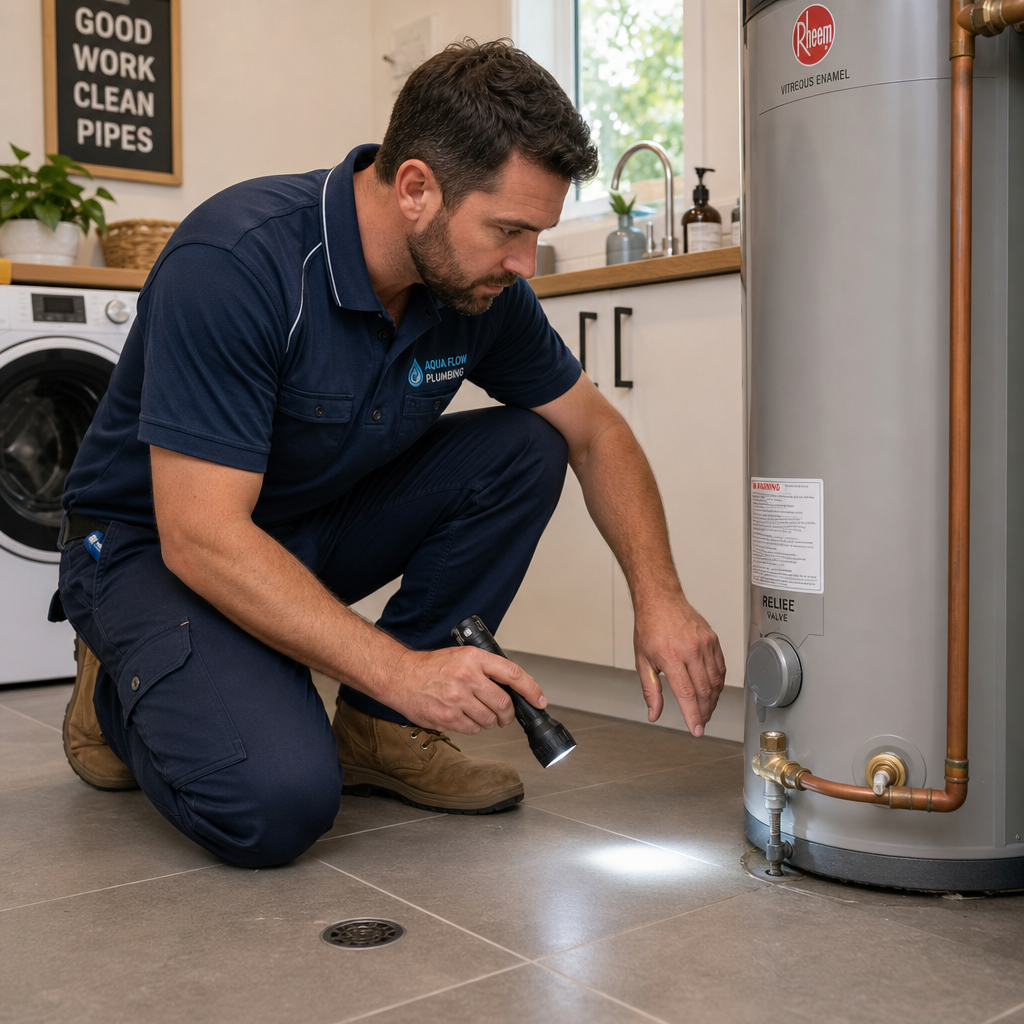
- Hot water systems: A pressure relief valve that weeps or a corroded tank can release water slowly. Check around the base of your hot water unit for moisture or rust staining.
- Underground supply pipes: Tree roots, ground movement and age can all cause cracks in the pipes running from the meter to your home. Wet patches in the garden, soft ground near the driveway or unexplained green patches of lawn can all be signs.
- Irrigation and garden taps: Outdoor fittings are often overlooked. Check garden taps, hose connections and irrigation controllers for drips or weeping joints.
When to Call a Licensed Plumber
Some leaks are easy to confirm but impossible to fix without professional help. If your meter test shows water is being lost and you can't identify the source yourself, it's time to bring in a licensed plumber.
You should also call a plumber promptly if you notice:
- A sudden or unexplained spike in your water bill
- Damp patches, bubbling paint or soft spots in walls or ceilings
- The sound of running water when all taps are off
- Reduced water pressure throughout the home
- Wet or spongy ground near your water meter or along the path to your house
Leaving a hidden leak unaddressed can lead to structural damage, mould growth and significantly higher repair costs down the track. Catching it early — even if you can't pinpoint the exact location — puts you in a much better position.
A Note for Landlords and Property Managers
If you manage a rental property in Blacktown or the surrounding suburbs, regular meter checks are a practical part of property maintenance. A tenant may not notice or report a slow leak, and the cost can accumulate quietly between inspections. Building a simple water meter check into your routine inspection process is a low-effort way to protect your investment.
What Happens During a Leak Detection Assessment
When a plumber attends for a leak investigation, they will typically confirm the meter test results, inspect accessible fixtures and fittings, and use their experience to narrow down the likely source. In some cases, more detailed detection methods may be needed for underground or concealed pipes — your plumber will explain what is involved and why before any further work is carried out.
At Blacktown Flow Plumbing, we take the time to explain what we've found and walk you through the available options before any work begins. There's no pressure and no unnecessary upselling — just honest, practical advice from a local plumber who knows the area.
If you'd like to understand more about your hot water system while you're investigating plumbing issues, our article on five signs your hot water system needs replacing is worth a read.
Get Advice Before a Hidden Leak Gets Worse
Need help with a plumbing or hot water problem? Contact Blacktown Flow Plumbing to discuss what is happening and arrange an assessment. We'll explain the practical next steps before any work begins.
Call us on 02 5550 1234 or send an enquiry to info@bfp.au We service Blacktown, Seven Hills, Kings Langley, Quakers Hill, Rooty Hill, Mount Druitt, Prospect and surrounding Western Sydney suburbs.